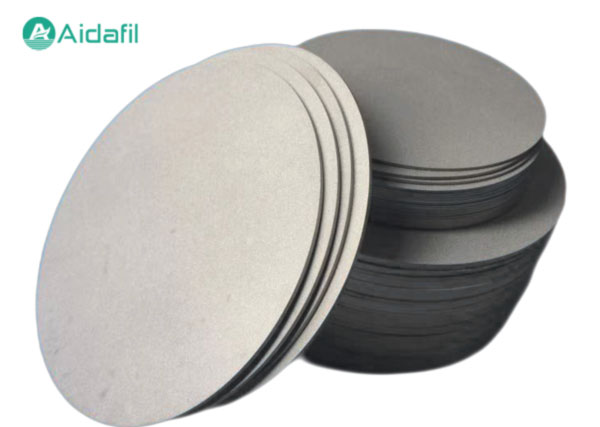
Compare alambre de cuña y filtros sinterizados de malla por retención de partículas, fuerza, limpieza, caída de presión y condiciones de proceso.
Introducción
El alambre de cuña y la malla sinterizada son ambas construcciones de filtros de metal, pero se comportan de manera diferente en el servicio. Uno utiliza una herida de alambre perfilada o soldada en una pantalla ranurada. El otro utiliza capas de malla metálica unida o fibra de metal para crear una estructura de filtración porosa.
La elección entre ellos no debe basarse únicamente en el material. Depende del tamaño de la partícula a eliminar, el diferencial de presión, el método de limpieza, el fluido, la temperatura y las cargas mecánicas del elemento.
Esta guía compara las dos construcciones y ofrece un proceso práctico de selección para aplicaciones de filtración industrial. Se trata de un resumen técnico inicial; la especificación final debe ser confirmada con el proveedor de filtros y los requisitos del equipo.
Cómo se construyen filtros de alambre de Wedge
Un filtro de alambre de cuña utiliza alambres perfilados dispuestos alrededor de barras de soporte o un marco. El perfil de alambre crea una ranura continua con un camino de flujo relativamente abierto. El ancho de ranura es una especificación clave porque controla el tamaño de partícula nominal que puede pasar a través de la pantalla.
Las pantallas de alambre de cuña se utilizan a menudo para filtración gruesa a media, lavado de espaldas, deshidratación y aplicaciones donde la fuerza mecánica y un área de flujo abierto son importantes. La superficie exterior lisa puede ayudar con la limpieza en algunos diseños.
El rendimiento real depende de ancho de ranura, perfil de alambre, estructura de soporte, dirección de flujo y la forma en que se monta el elemento. Una pantalla de alambre de cuña no es intercambiable con una malla tejida o elemento sinterizado simplemente porque ambos están hechos de acero inoxidable.
Cómo se construyen filtros de malla sinterizados
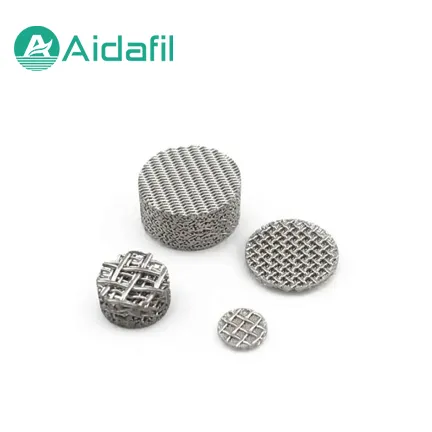
Los filtros de malla sinterizados se hacen mediante la unión de una o más capas de malla metálica o fibra de metal. El proceso de sinterización crea una estructura porosa fija con un tamaño de poro controlado y una estabilidad mecánica mejorada en comparación con una malla tejida floja.
Los filtros sinterizados se pueden diseñar para la retención de partículas más finas y pueden proporcionar un gran área de filtración en un elemento compacto. La estructura puede incluir una capa protectora, una capa de filtración y capas de soporte. La construcción exacta debe ser confirmada desde el dibujo del producto.
Los medios metálicos sinterizados se utilizan en aplicaciones de alta temperatura, alta presión, viscosa o químicamente exigentes donde un filtro de metal limpiable puede ser adecuado. La limpieza y regeneración deben corresponderse al contaminante y a la estructura poro.
Comparación con un Glance
Propiedad | Wedge Wire | Mesh sinterizado |
Mecanismo de filtración | Ranura controlada entre alambres perfilados | Estructura metálica fija porosa |
Rango de retención típico | A menudo coordín, dependiendo del ancho de ranura | Puede soportar una filtración más fina dependiendo de la construcción |
Superficie de flujo | Generally open, with a defined slot pattern | Depends on mesh layers and pore size |
Resistencia mecánica | Good structural strength when correctly supported | High when designed with suitable support layers |
Cleanability | Often suitable for backwashing or mechanical cleaning | Cleanable in some designs, but cleaning must suit the pore structure |
Pressure drop | Depends on slot width, flow area, and flow direction | Depends on pore size, media construction, and flow rate |
Best starting point | Coarse screening, separation, backwash, open-flow applications | Fine metal filtration, high-temperature or demanding process conditions |
The table is qualitative. It cannot replace a pressure-drop calculation, particle-retention review, or compatibility check for a specific process.
Compare Particle Retention Requirements
Start with the smallest particle that must be retained and the acceptable pressure drop. A wedge wire screen is often considered when the required slot is relatively open and the main goal is to retain larger solids while maintaining flow. A sintered element may be considered when finer filtration is required and the process can accept the associated pressure drop and cleaning requirements.
Do not compare only the nominal micron number. Ask how the rating was determined and whether it is a nominal or absolute value. The shape of the particles and the flow direction can affect the result.
Evaluate Mechanical and Pressure Conditions
Both constructions can be strong, but the support structure matters. Check the differential pressure across the element, the maximum pressure, the temperature, and any vibration or mechanical load. A filter that is strong in one direction may not be suitable if the flow can reverse or if the element is cleaned by high-pressure backflow.
Confirm the housing support and the sealing arrangement. A metal element may be durable, but a damaged seal or unsupported end cap can still allow bypass.
Consider Cleaning and Maintenance
Wedge wire screens are often selected where the process allows backwashing or mechanical cleaning. The open slot structure can release some contaminants more easily than a fine porous medium, but the result depends on the contaminant and the cleaning procedure.
Sintered elements can be cleaned in suitable applications, but the cleaning method must not damage the bonded structure or leave contamination trapped in the pores. Verify the recommended cleaning agent, temperature, pressure, and drying procedure with the supplier.
If cleaning is difficult or the contaminant cannot be removed reliably, a disposable or replaceable element may be a better service choice. The lowest purchase price is not the lowest lifecycle cost if the element cannot be cleaned effectively.
Review the Process Fluid and Temperature
Check corrosion resistance, temperature range, and compatibility with the fluid. Stainless steel grades are not equally suitable for every chemical environment. If the process contains chlorides, aggressive additives, or high-temperature oxidation, confirm the material with the supplier.
Also consider gasket and seal materials. The metal filter may be suitable for a high-temperature process, while the seal is not. The complete assembly must be reviewed.
Common Applications to Discuss with a Supplier
Typical questions include:
· Is the filter used for water, oil, gas, solvent, polymer, or another fluid?
· Is the main requirement coarse screening or fine particle removal?
· What is the normal and maximum pressure drop?
· Will the element be backwashed, chemically cleaned, or replaced?
· What are the temperature and corrosion conditions?
· What connection, diameter, length, and sealing arrangement are required?
These details make the difference between a general material comparison and a usable filter specification.
Common Selection Mistakes
One mistake is assuming that a finer filter is always better. A finer element may increase pressure drop, shorten service life, or become difficult to clean. Another is selecting a metal filter because it is reusable without checking whether the contaminant can actually be removed.
Teams sometimes compare a wedge wire slot size with a sintered mesh micron rating as if the numbers had the same meaning. The test method and filtration mechanism may differ. Finally, ignoring the seal, support, and housing interface can lead to a filter that appears to fit but does not perform reliably.